 +994512060920


You are considering implementing a new system for your company, but management or investors naturally ask the ultimate question: "When and how will the money we spend on this software pay us back?" If you are not fully familiar with the methods of measuring CRM benefits, giving a definitive answer to this question can be quite challenging.
In this article, we will uncover the behind-the-scenes of the CRM ROI calculation process. We will break down exactly which expenses and revenues must be taken into account, using a step-by-step guide based on the real-world experiences of local businesses.
What is ROI Anyway?
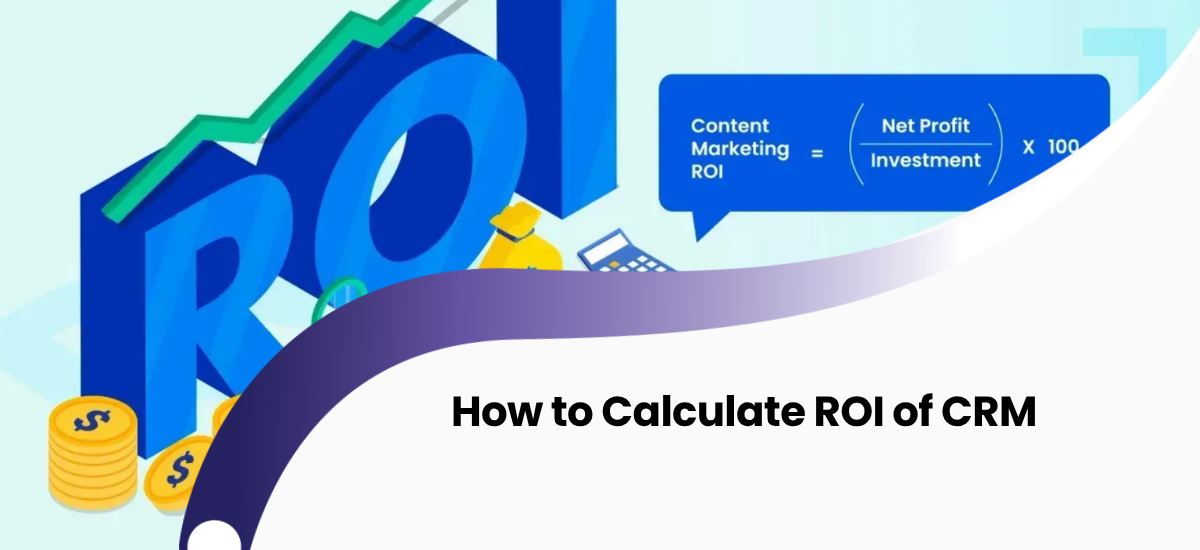
ROI (Return on Investment) is based on a very simple logic: for every 1 AZN you invest in your business, how much profit do you get back? When calculating the CRM return on investment, the basic formula is typically expressed as follows:
ROI = [(Value Gained − Investment Cost) ÷ Investment Cost] × 100
Let's look at a straightforward example: Suppose the total CRM cost, including development, implementation, and other expenses, amounts to 10,000 AZN. By the end of the year, thanks to this system, your company gains 25,000 AZN in additional revenue and savings:
ROI = (25,000 − 10,000) ÷ 10,000 × 100 = 150%
However, there is a catch: CRM ROI is not just about "how much more did we sell last month?" To get a true and accurate figure, we must look at both sides of the scale—hidden costs and indirect savings alike.
The Two Sides of CRM ROI
Side 1: The Reality of Expenses (Total Cost of Ownership)
Focusing solely on the monthly or annual license fee when purchasing software is the biggest mistake. A realistic expense sheet usually looks like this:
| Expense Type | Real-World Example (AZN) |
|---|---|
| CRM software development / licensing | 8,000 |
| System integrations (1C, WhatsApp, Website) | 2,000 |
| Team training and onboarding | 500 |
| Monthly technical support (for 12 months) | 1,800 |
| Server / cloud hosting fees (for 12 months) | 600 |
| Total (First-year expense) | 12,900 |
We previously discussed the hidden costs of software development—when calculating an accurate ROI, make sure to add these easily overlooked budget details to your sheet.
Side 2: The Value Your Company Gains
How exactly does the money spent on a CRM system come back to your pocket? This value is primarily generated across 4 key areas:
1. Time Savings = Money Savings
The hours your employees spend on mechanical tasks (filling out Excel sheets, compiling manual reports) are actually costing your company money. The greatest power of a CRM is automating these routine processes.
| Work Process | Before CRM (Manual) | After CRM (Automated) | Daily Time Saved |
|---|---|---|---|
| Entering new leads (customers) | 15 min / lead | 0 min (enters directly) | 2 hours (Based on 8 leads/day) |
| Compiling weekly sales reports | 3 hours / week | 5 min / week | ~ 2.9 hours / week |
| Tracking follow-ups with clients | 1 hour / day | 10 min / day | 50 min / day |
| Searching for an old customer's history | 10 min / call | 30 seconds / call | 1.5 hours (Based on 10 calls/day) |
What is the financial impact of this on your budget?
Imagine you have 3 sales managers. Each of them saves 2 hours a day thanks to the CRM (Total: 6 hours saved per day). If an employee's hourly cost averages 8 AZN, that amounts to 48 AZN saved per day. Multiplied by 250 working days a year, your company saves 12,000 AZN worth of time annually. Your team can now redirect this newly gained time toward closing more deals!
2. Recovering Lost Sales and Boosting Revenue Growth
A CRM prevents "forgotten and lost" customers while simultaneously boosting your overall conversion rate.
Rescuing Lost Leads:
Let's say that before using a CRM, 30% of your 100 monthly inquiries (leads) went straight to competitors simply because managers forgot to follow up on time. With the CRM's automated reminders, this drop-off rate plummets to 8%.
This means you successfully rescue an extra 22 customer inquiries every single month.
If your average conversion rate from a lead to a sale is 20%, and the average value per deal is 500 AZN (500 x 20% = 110 AZN/lead), those 22 rescued leads bring you 2,420 AZN monthly, translating to 29,040 AZN in additional annual turnover.
3. Customer Retention (Loyalty)
Did you know that acquiring a new customer is 5 to 7 times more expensive than retaining an existing one? A CRM system tracks your customers' purchase history, special occasions, and past complaints, helping you build a personalized, long-term relationship with them.
A Practical Example:
If you reduce your customer churn rate by just 3% thanks to a CRM (for instance, keeping 3 out of 100 customers who would otherwise leave) and the average Customer Lifetime Value (LTV) is 2,000 AZN, this results in an extra 6,000 AZN in annual revenue out of nowhere.
4. Minimizing Costly Human Errors
Incorrectly generated invoices, forgotten orders, or couriers sent to the wrong address... Every single error stemming from the human factor is a hidden financial loss for the business. Streamlined, systemized operations cut these mistakes down by 80-90%.
Assuming you experience just 3-4 such errors a month, and fixing each mistake (handling returns, reshipping, client compensation) costs the company 200 AZN, a CRM effectively helps you avoid between 7,200 and 9,600 AZN in annual losses.
The Big Picture: Full ROI Calculation for a Real Business
Let's add up all the numbers for a medium-sized distributor company with a 10-person team:
| Source of Value | Annual Value Gained (AZN) |
|---|---|
| Employee time savings (Productivity boost) | 12,000 |
| Rescued leads converted into sales | 29,040 |
| Increased customer loyalty (Retention) | 6,000 |
| Reduction in damages from human errors | 7,200 |
| Total Gained Annual Value | 54,240 |
| Total CRM cost for the first year | 12,900 |
| Return on Investment (ROI) | ~ 320% |
| Payback Period | ~ 3 months |
The Verdict: The project pays for itself within approximately 3 months, and the remaining 9 months of the year count as pure, xalis profit for the company.
KPIs to Track for Measuring CRM Benefits
To run an accurate calculation, make sure to monitor and compare these key performance indicators before and after implementing the software:
- Lead-to-customer conversion rate: What percentage of 100 incoming inquiries actually turn into paying clients?
- Sales cycle length: How many days pass between the initial contact and the final payment?
- Average deal value (Average Check): What is the average monetary value of a single sale?
- Customer retention rate: What percentage of your customers continue to stay with you month after month?
- Manager productivity: How many successful sales or client interactions can a single employee handle per month?
Intangible (Hidden) Values of a CRM
Sometimes, measuring CRM benefits goes beyond numbers on a spreadsheet. There are invaluable aspects of systemization that cannot be directly calculated in cash:
- Protecting corporate memory: Even if your top sales manager leaves the company, all customer data, communication history, and critical deal notes remain safely secured within your system.
- Scalability readiness: The time required to onboard, train, and adapt new hires to your workflow drops drastically.
- Transparency for management: The luxury of tracking your company's pulse, sales pipelines, and employee performance in real-time from anywhere in the world.
Estimate Quick ROI for Your Own Business
What is the current situation in your company? Answer these 5 quick questions to estimate your potential returns:
- How many inquiries (leads) does your company receive per month on average?
- What is the estimated percentage of forgotten or un-followed-up leads right now?
- What is the average revenue generated from a single sale?
- What percentage of incoming inquiries do you currently convert into closed deals?
- How many hours do your employees spend every day just writing reports and filling out sheets?
If you find yourself lost among the numbers, feel free to share these metrics with us. Our specialists will generate a free CRM ROI calculation and present a detailed report customized for your business.
Frequently Asked Questions (FAQ)
When does an investment in a CRM system start showing results?
Increased workflow speed and time savings are felt from day one. Visible upward trends in sales volumes are typically measured clearly within 3 to 6 months. For a comprehensive, accurate ROI picture, evaluating the metrics at the end of the first year is ideal.
Is a CRM truly beneficial for small businesses (3-5 employees), or is it just an extra expense?
It is completely worth it. In small teams, an employee's time is even more valuable, making automation critical to keeping operations afloat. You can explore why we place a special emphasis on this in our dedicated article on CRM for small business.
Is it better to buy an off-the-shelf SaaS package or get a custom CRM developed?
In the long run, a custom CRM tailored specifically to your operations always delivers a higher ROI. It eliminates user license limitations, works seamlessly in your native language, and offers robust, localized capabilities for integrating with 1C, local banks, and WhatsApp. However, if you are looking for a quick, immediate solution, off-the-shelf software takes less time to deploy initially.
Conclusion
Conducting a CRM ROI calculation doesn't require overly complex mathematics. It simply requires you to look at operational details—such as hours saved, insurance against human error, and customer satisfaction—through a clear cost-benefit lens.
Global statistics and local experiences show that a well-chosen, properly adopted CRM system returns to the business with a heavily positive ROI in almost all scenarios. For most local companies, the complete payback period is just 3 to 6 months.
Would you like a precise CRM ROI analysis for your business? Stop guessing and start relying on hard data—book a free consultation with the Crocusoft team today →