 +994512060920


In today’s fast-paced business world, the old saying "the big fish eats the small fish" has evolved; now, "the fast fish eats the slow fish." Traditional systems where projects are planned for months only to yield delayed results are being replaced by more dynamic approaches. This brings us to a frequently asked question: What is Agile, and why do the world’s leading tech giants swear by it?
In this article, we’ll dive deep into Agile methodology, its core principles, the answer to what is Scrum, and how you can manage your team more effectively using these frameworks.
What is Agile and Why Does It Matter?
The simplest answer to what is Agile is that it's a mindset focused on flexibility, speed, and continuous improvement in project management. Agile methodology suggests breaking a project down into small, manageable pieces rather than tackling it as one massive, intimidating task.
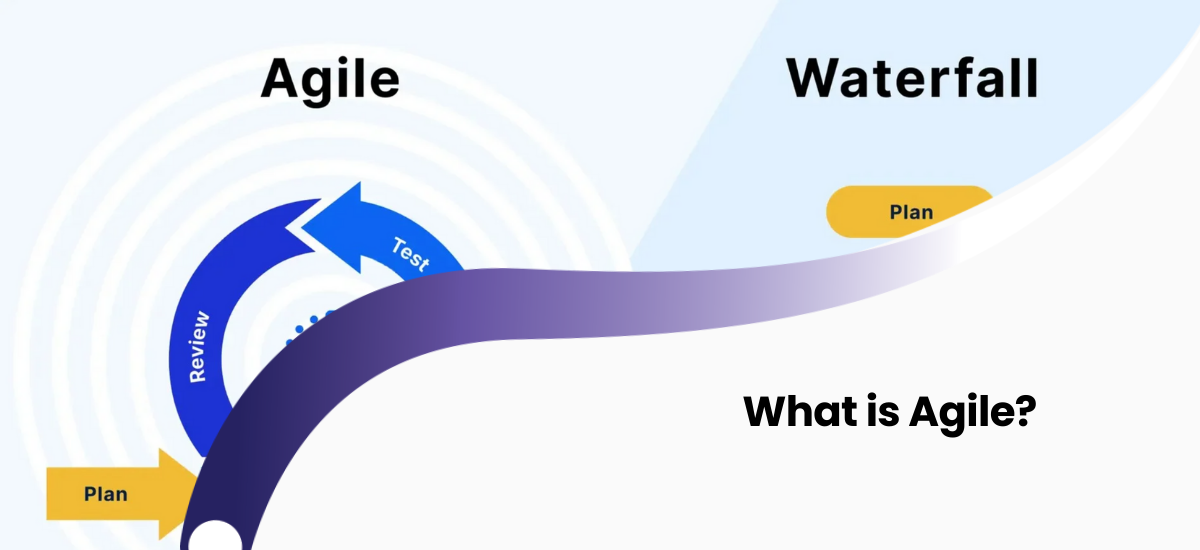
Unlike traditional methods (such as Waterfall), the Agile method doesn’t resist change—it embraces it. The goal isn’t just to build a "perfect" plan but to deliver a valuable product to the customer as quickly as possible.
The 4 Golden Principles of Agile Methodology
Agile is more than just a schedule; it’s a philosophy. This philosophy is built upon 4 core values from the Agile Manifesto:
- Individuals and Interactions over processes and tools.
- Working Software over comprehensive documentation.
- Customer Collaboration over contract negotiation.
- Responding to Change over following a plan.
What is Scrum? The Most Popular Agile Framework
When discussing Agile, one cannot ignore the question: What is Scrum? People often confuse these two terms. Put simply: if Agile is the mindset, Scrum is the specific framework (a set of rules) used to implement that mindset.
In Scrum, work is divided into short cycles called "Sprints" (usually 2 weeks). At the end of each sprint, the team delivers a finished, functional feature to the customer.
Roles in an Agile Team: Who Does What?
Agile methodology moves away from hierarchical "boss-employee" relationships. Instead, everyone is a vital part of the team:
- Product Owner: Answers "What are we building?" They represent the customer's voice and define priorities.
- Scrum Master: Answers "How can we work better?" They act as a coach, removing obstacles and ensuring the team follows the Agile method correctly.
- Development Team: Developers, designers, and testers. They are the "engine" that executes the work.
How to Effectively Manage Your Team with Agile
If you’re looking to transition to the Agile method, follow these steps:
1. Break Big Goals into Small Sprints
Don’t view a project as a 6-month marathon. Break it into 2-week sprints. This boosts team motivation and allows for rapid results.
2. Transparency and Daily Stand-ups
Hold 15-minute daily meetings. Everyone should answer three questions:
- What did I do yesterday?
- What will I do today?
- What is blocking my progress?
3. Continuous Feedback
The heart of Agile methodology is feedback. Show the work to the customer at the end of every sprint. If you’re heading in the wrong direction, it’s better to find out in 2 weeks rather than 6 months.
4. Use the Right Tools
Digital tools are essential for tracking progress. Jira or Trello are perfect for task management, while Slack is ideal for rapid communication.
Conclusion
Ultimately, the answer to what is Agile isn't just about speed—it's about quality and adaptation. In a shifting market, Agile methodology is your strongest tool for survival and competition. Whether it's software development or a marketing project, an agile approach will get you to your goal faster.
Frequently Asked Questions (FAQ)
What is the difference between Agile and Waterfall?
Waterfall plans projects in linear, sequential phases (making change difficult), whereas Agile methodology manages projects iteratively by breaking them into small, flexible parts.
Who is a Scrum Master?
A Scrum Master is not the team's "boss" but a "servant leader." They ensure the team adheres to Agile principles and work to remove any blockers in the workflow.