 +994512060920


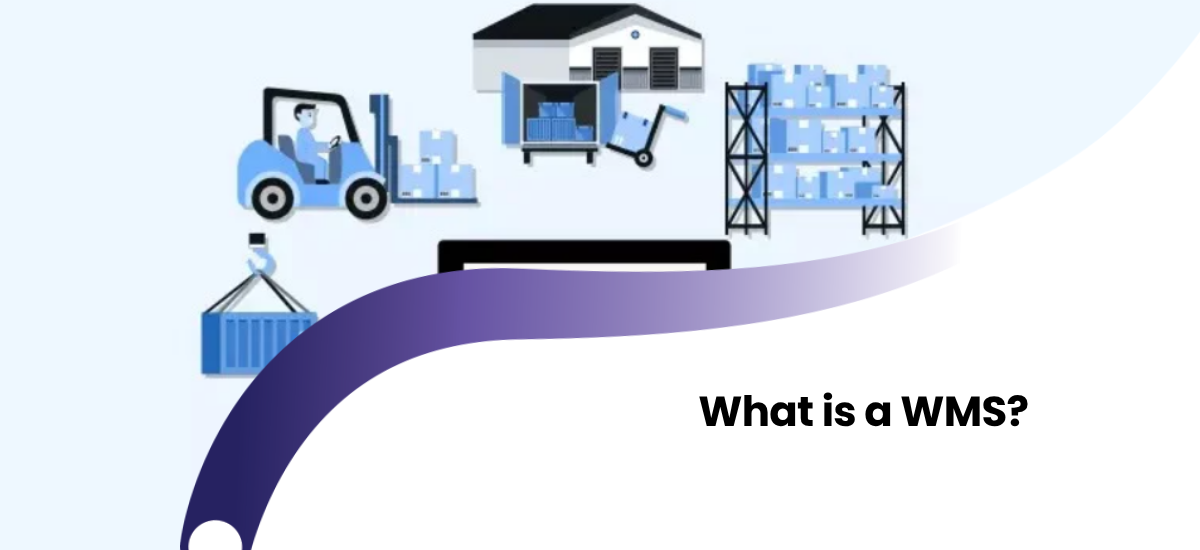
Imagine this: Your company’s sales are skyrocketing, but behind the scenes, your warehouse is descending into utter chaos. Warehouse employees spend valuable minutes wandering between aisles trying to locate a single item for an order. Products with identical packaging are repeatedly picked by mistake and shipped to the wrong customers, causing your reverse logistics (Return) costs to balloon. The inevitable result is delayed shipments and a relentless stream of customer complaints.
This operational crisis cannot be solved by a simple accounting or inventory tracking program. The only systemic solution to these physical bottlenecks is a WMS (Warehouse Management System). Although many companies confuse it with standard inventory software (IMS), they address operational challenges on entirely different scales. In this comprehensive guide, we dissect what a WMS truly is, how it re-engineers the physical logic of your warehouse, and the massive operational efficiency it unlocks for your business.
What is WMS and how does it orchestrate the warehouse?
The most precise answer to what is WMS is this: A Warehouse Management System is a centralized enterprise software solution that optimizes, controls, and directs every single physical process and human action taking place inside the four walls of a warehouse in real-time. It meticulously manages every step from inbound receiving (Receiving) and shelving (Put-away), to order fulfillment (Picking) and final dispatch (Shipping).
A true WMS acts as the "Digital Twin" of your physical facility. Within the system, every single aisle, shelf, and individual bin is assigned a highly specific digital address. Humans no longer guess where things should go or how to find them; the system routes them via the shortest, most mathematically efficient path possible.
Warehouse management system vs. IMS: The Fundamental Differences
One of the biggest misconceptions in logistics is treating a warehouse management system as the same thing as an IMS (Inventory Management System). A WMS does not replace an IMS; it operates as an advanced, highly specialized layer on top of it. Here is the critical distinction:
- IMS (The Stock System): Answers the question, "How much total product do we own, and when do we need to order more from the supplier?" Its core focus is pure accounting, valuation, and procurement.
- WMS (The Operational System): Answers the question, "On which exact shelf is that product located, what is the fastest walking route to get there, and which specific employee should be assigned to grab it right now?" Its core focus is physical space and human speed.
| Functional Criteria | IMS (Inventory Management) | WMS (Warehouse Management) |
|---|---|---|
| Core Focus | Total stock quantities and purchasing needs. | Internal warehouse workflows and labor productivity. |
| Dynamic Addressing (Slotting) | Limited, often just a text note. | Fully automated: Finds the ideal shelf based on weight and velocity. |
| Active Task Management | None. It only generates reports. | Pushes live, step-by-step tasks to workers' mobile scanners. |
| Picking Optimization | None. | Calculates the shortest walking routes to eliminate wasted time. |
WMS functions: How does it bring order to chaos?
A robust suite of WMS functions acts as the central nervous system of a logistics hub. Below, we analyze the most critical mechanisms of this architecture:
1. Dynamic Warehouse Mapping and Slotting
Every single square inch of your warehouse is mapped digitally, generating addresses like "A-02-C-05" (Aisle A, Bay 02, Shelf C, Bin 05). An intelligent Slotting algorithm automatically assigns fast-moving (high-velocity) items to lower shelves closest to the shipping dock, while heavy, slow-moving items are routed to higher or distant racks. This singular function can reduce the walking time of your staff by over 30%.
2. Flawless Inbound Receiving
In traditional setups, a worker reads a paper manifest, counts the goods, writes it down, and manually types it into a computer later (a process riddled with errors). With a WMS, the worker simply scans the barcode on the incoming pallet. The system instantly cross-references it with the supplier's digital Purchase Order (PO), alerts the worker immediately if an item is missing, and tells them exactly which empty shelf to place the goods on.
3. Advanced Order Picking
This is where a WMS generates the most profound ROI. When an e-commerce order drops, a worker does not wander aimlessly. The system calculates a rapid "Zig-Zag" walking route and pushes it to their terminal. For massive volumes, the WMS deploys advanced picking strategies:
- Batch Picking: A worker collects the same SKU for 5 different orders simultaneously, preventing them from visiting the same shelf five times.
- Zone Picking: In massive facilities, an employee only picks items within their designated zone and places them on a conveyor belt. The order is consolidated later.
4. Error-Free Packing and Shipping
The system calculates the exact volume and weight of the picked items and suggests the most optimal, cost-effective box size to the packer. Once packed, the WMS utilizes an API to communicate directly with the courier's system, automatically printing the Shipping Label and emailing the customer their tracking code.
5. Real-Time Labor Productivity Tracking
Management gains absolute transparency into human performance based on hard data: "John picked 45 items an hour with zero errors, but David only picked 20 items and made 2 errors." This objective data is invaluable for proper KPI evaluations and workforce planning.
What Financial Leaks Does a WMS Directly Plug?
- The Misplacement Drain: If an item is placed on the wrong shelf, the system thinks it is in stock, but physically, it cannot be found. Months later, it is discovered expired in a corner. A WMS forces the worker to scan the barcode of the shelf where they deposit the item, completely eliminating this "lost-in-warehouse" scenario.
- The Shipping Error Drain: Shipping the wrong color or size to a customer results in direct financial loss (return courier fees and lost customer loyalty). By requiring barcode validation during the final packing phase, a WMS ensures a 99.9% error-free dispatch rate.
- The Wasted Walking Drain: Industry studies reveal that in traditional warehouses, 60% of a worker’s time is wasted simply walking between aisles looking for products. By optimizing routing, you can effectively double your warehouse throughput capacity without hiring a single additional employee.
Global Platforms vs. Custom-Engineered WMS Solutions
While massive corporations might deploy global solutions like SAP WM or Oracle WMS, for the local and regional markets, developing a Custom (Bespoke) software solution is frequently far more agile and cost-effective:
| Critical Evaluation | Global WMS Platforms | Custom-Engineered WMS |
|---|---|---|
| Interface Usability | Complex, enterprise-heavy interfaces that overwhelm warehouse workers. | 100% tailored, simplified UI built in the local language for fast adoption. |
| Local ERP Integrations (e.g., 1C) | Highly complex, requiring expensive third-party middleware and consultants. | Built natively into the core of the system to perfectly match your data flow. |
| Local Courier APIs | Often incompatible with regional or local delivery service APIs. | Can seamlessly connect to absolutely any local or international cargo API. |
| Financial Model | Exorbitant perpetual licensing and monthly subscription fees. | A one-time capital investment where your company owns the intellectual property. |
Frequently Asked Questions
Does every single warehouse need a WMS? Where is the threshold?
No. If your facility is smaller than 5,000 square feet, operates with fewer than 5 employees, and processes under 50-100 orders a day, a well-configured IMS (Inventory Tracking System) is entirely sufficient. However, if your warehouse is vast, contains multiple temperature zones, or picking errors are actively harming your brand, upgrading to a WMS is mandatory.
How is the hardware side managed when deploying this software?
Modern, automated WMS architectures are no longer chained to incredibly expensive, proprietary industrial scanners. Android or iOS-based industrial smartphones—or even standard smartphones equipped with rugged cases—can function perfectly as barcode scanners using the system's native mobile application.
Does implementing a WMS require completely shutting down our operations?
When executed by a professional IT engineering team, no. The system is deployed in phases (starting in a designated Pilot Zone). Extensive team training and infrastructure testing (Wi-Fi dead zones, barcode readability) are completed well in advance. The final "Go-Live" switchover is typically scheduled during the most passive hours, such as a weekend or overnight shift.
Conclusion
A WMS is not merely an accounting tool; it is the absolute "brain" and "GPS navigation" system of your logistics hub. Traditional warehouses that rely on human memory and paper printouts collapse under the pressure the moment the business attempts to scale. A WMS eliminates this operational chaos, relieves your employees from making guesswork decisions, and instills a rigorous, fast-paced digital discipline.
If there are severe inefficiencies causing financial leakage in your supply chain right now, it is time to digitize the physical floor. A company managing its fulfillment with a WMS can flawlessly pick, pack, and dispatch an order to the customer's door in just 4 hours—an operation that takes their legacy competitors 3 agonizing days.
Are you looking to audit your current warehouse processes and engineer a WMS architecture tailored exactly to your logistics? Get in touch with the expert engineering team at Crocusoft right now to secure a deep IT consultation →