 +994512060920


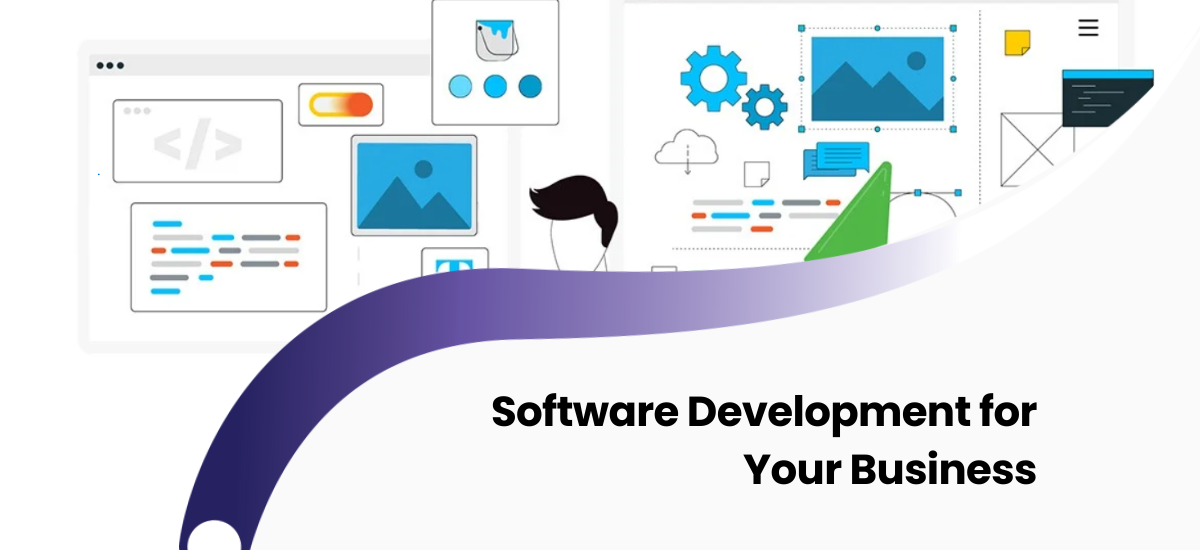
You want to build custom software for your business — but you don't know where to start, what questions to ask, or what to expect at each stage. This uncertainty is something almost every business owner experiences when ordering software for the first time.
Without understanding the process, clients often overpay, fund unnecessary features, or wait months only to receive something that doesn't match their expectations. In this article, we walk through the exact software development process Crocusoft applies across real client projects — step by step.
Why Does the Development Process Matter?
Without a structured process, custom software projects frequently run into three critical problems: budget overruns, missed deadlines, and results that don't match expectations. A well-defined process reduces all three risks significantly.
Research consistently shows that 70% of software projects exceed their initial budget. The root cause is almost always the same: requirements were not clearly defined at the start — a failure in the very first stage of the process.
The 7 Stages of Software Development
Stage 1: Requirements Gathering and Analysis
Every successful software project starts with one question: "What problem are we actually solving?"
At this stage, the Crocusoft team conducts in-depth discovery sessions with the client:
- How do your current business processes work?
- Where are the bottlenecks — where is time being lost?
- Who will use the software — how many people, what roles?
- What systems need to integrate with it (accounting, ERP, third-party tools)?
- What is the budget and timeline?
The output of this stage is a Business Requirements Document (BRD). Starting development without this document is like building a house without a foundation plan.
Duration: 3–7 business days
Stage 2: Technical Architecture Design
Once requirements are documented, the technical team designs the system architecture — the blueprint for how the software will be built.
Decisions made at this stage include:
- Which technologies to use (backend, frontend, database)
- Module structure and system boundaries
- How integrations with external systems will be built
- Security architecture and access control model
- Infrastructure — cloud hosting or on-premise servers?
Sound architecture decisions reduce long-term costs. Poor architecture often leads to a full system rewrite within 1–2 years — at far greater expense than getting it right the first time.
Duration: 3–5 business days
Stage 3: UI/UX Design
Before a single line of code is written, the software's appearance and user experience are designed. This stage produces:
- Wireframes — skeletal layouts of every screen, showing structure without visual styling
- Interactive prototype — a clickable demo that simulates real usage
- UI design — colors, typography, icons, and the complete visual interface
The client reviews and approves the design before development begins. Change requests at this stage cost a fraction of what they would cost after code has been written — making early feedback invaluable.
Duration: 1–3 weeks depending on project scope
Stage 4: Development
With approved designs in hand, the development team begins building. Crocusoft uses Agile methodology — the project is broken into short cycles called sprints, typically 2 weeks each, with a working module delivered at the end of every sprint.
The advantages of this approach:
- The client sees tangible progress throughout — not just at the end
- Change requests can be incorporated early, before they become expensive
- Unexpected technical problems surface quickly and are resolved in context
- There are no surprises at final delivery
Duration: 4–16 weeks depending on project scope
Stage 5: Testing and Quality Assurance
Every module is tested by an independent QA team before it moves forward. Testing types include:
- Functional testing — does every feature work as specified?
- UI testing — does the interface match the approved design?
- Performance testing — how does the system behave under load?
- Security testing — are there vulnerabilities or data exposure risks?
- Integration testing — do connections with external systems work correctly?
All identified issues go through a debugging process and are resolved before the next stage begins. Nothing moves forward until it passes QA.
Duration: Ongoing — runs in parallel with each development sprint
Stage 6: Deployment and Launch
The tested software is deployed to the production environment — the client's servers or cloud infrastructure. This stage includes:
- Server configuration and environment setup
- Data migration from existing systems
- Integration verification in the live environment
- User Acceptance Testing (UAT) with the client's team
- Staff training — how to use the system in daily operations
Deployment is a critical phase. When poorly planned, it can disrupt ongoing business operations. Crocusoft typically schedules production deployments outside of business hours — evenings or weekends — to minimize impact.
Duration: 3–7 business days
Stage 7: Support and Maintenance
Launch is not the end of the process — it's the beginning of a new phase. Real-world usage reveals new needs, minor bugs, and performance edge cases that couldn't be anticipated during development.
Crocusoft provides ongoing support that includes:
- Bug fixes and technical issue resolution
- Performance monitoring and optimization
- New feature development as business needs evolve
- Security patches and updates
- User support and guidance
Duration: Ongoing — monthly retainer basis
Process Summary
| Stage | What happens | Output | Duration |
|---|---|---|---|
| 1. Requirements | Needs gathered and documented | Business Requirements Document | 3–7 days |
| 2. Architecture | Tech stack and system design | Technical specification | 3–5 days |
| 3. UI/UX Design | Wireframes, prototype, visual design | Approved design files | 1–3 weeks |
| 4. Development | Code written, modules built | Working software | 4–16 weeks |
| 5. QA & Testing | Bugs found and fixed | Tested, verified product | Parallel |
| 6. Deployment | Launch to production, staff training | Live system | 3–7 days |
| 7. Support | Ongoing maintenance and updates | Stable, evolving system | Ongoing |
What Role Does the Client Play?
The most successful projects are built with active client involvement. Your role is not simply to place an order and wait. Here is what the process requires from you:
- Come to discovery sessions prepared — know your workflows and pain points
- Review designs promptly and provide clear feedback
- Test delivered modules at the end of each sprint
- Involve end users in the UAT phase
- Communicate change requests early — the later a change is requested, the more it costs
Projects with low client engagement consistently run longer and deliver weaker results. Active clients get better software, faster.
Frequently Asked Questions
How long does custom software development take?
Simple tools take 6–10 weeks. Mid-complexity projects typically run 3–5 months. Large enterprise systems can take 6–12 months. The timeline depends entirely on the scope of requirements.
Can requirements change after development starts?
Yes — but early changes are always cheaper. In Agile, change requests are incorporated into sprint planning. Late-stage changes have a direct impact on budget and timeline.
Will there be support after the software launches?
Yes. Crocusoft offers monthly support packages for all delivered projects covering bug fixes, technical support, and new feature development.
Is our data secure?
All Crocusoft projects include SSL encryption, role-based access control, and automated backups as standard. Data can also be hosted on the client's own servers if required.
Can the software work on mobile devices?
This is defined during the requirements stage. Web-based systems are built with responsive design to work across all devices. A dedicated mobile application can also be scoped as part of the project.
How do we get started with Crocusoft?
The first step is a free consultation. We listen to your business needs, ask the right questions, and provide an initial assessment — with no obligation to proceed.
Conclusion
A successful software development project depends less on technical expertise alone and more on following the right process. Clear requirements, transparent communication, and a structured approach protect both the client and the development team — at every stage.
If you're considering building custom software for your business, the first step is a conversation. Get in touch with Crocusoft for a free consultation →