 +994512060920


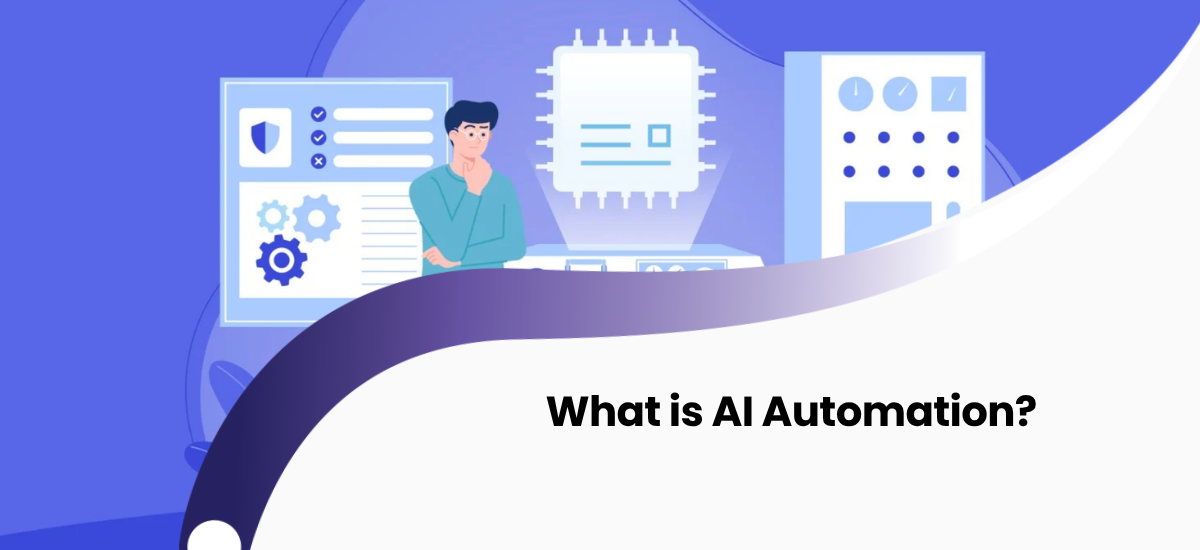
Automation itself is not a new concept in the corporate world. For decades, companies have relied on rule-based scripts, macros, and RPA (Robotic Process Automation) to save time and reduce manual labor. However, modern "AI Automation" is fundamentally different from its predecessors: it does not just blindly execute commands; it thinks, learns, and makes autonomous decisions.
In this article, we explain exactly what artificial intelligence automation is, how it differs from traditional automation software, and what strategic competitive advantages it brings to modern businesses looking to scale their operations.
What is AI automation and how does it differ from RPA?
What is AI automation is a critical question for modern executives. In short, it is a complex ecosystem that uses Artificial Intelligence (Machine Learning, NLP, Computer Vision) not just to execute predefined business processes, but to independently evaluate data, make decisions, and improve its own accuracy over time.
To summarize the difference with traditional automation (RPA) in one sentence: Traditional automation operates on the logic of "If A happens, do B"; AI Automation autonomously answers the question, "What exactly is the problem in front of me, and what is the absolute best solution (B, C, or D) to resolve it?"
Comparing Automation Technologies
| Technology Type | Operational Mechanism | Primary Limitation |
|---|---|---|
| Traditional Scripts | Works on strict, unchangeable, hard-coded rules. | Breaks immediately when encountering scenarios outside the rules. |
| RPA (Robotics) | Mimics human mouse and keyboard actions on an interface. | Cannot read or process unstructured (messy) data formats. |
| AI Automation | Understands context, analyzes variables, and adapts decisions. | Heavily relies on the quality of underlying data to learn correctly. |
Artificial intelligence automation: 5 core components
Artificial intelligence automation solutions operate on a fundamentally different level by simulating human cognitive functions through five foundational pillars:
1. Understanding Unstructured Data
Emails, scanned PDFs, images, voice recordings, and long web pages—AI can read and comprehend all of these simultaneously. While RPA can only copy data from a pre-defined box, AI autonomously answers the question, "What is the primary context and intent of this specific document?"
2. Context-Driven Decision Making
These systems rely on fluid context rather than rigid rules. For instance, when a complaint email arrives, a standard system merely routes it to the "Complaints" folder. An AI analyzes the customer's VIP status, detects an angry tone, recognizes that this is their third complaint, and immediately escalates the issue in the CRM as High Priority for management review.
3. Continuous Learning and Adaptation
The system learns from its mistakes as it is used. It might occasionally misjudge whether an email is spam or if a lead is genuine in the first few weeks, but by the third month, its predictive accuracy often climbs to 99%.
4. Autonomous, Agent-Like Execution
The system does not just perform isolated tasks; it executes an entire business process chain. A customer sends an email → AI reads it → updates the CRM → generates and sends a personalized template reply → creates a follow-up task for the sales rep → monitors the outcome. All of this happens with zero human intervention.
5. Explainability
Modern AI Automation solutions can explain their reasoning in human terms: "I rejected this incoming lead because the company's stated budget falls below our minimum threshold." This provides businesses with complete operational transparency.
AI business automation in real-world scenarios
AI business automation transforms theoretical technology into tangible financial value. Let's look at how it saves massive amounts of time and budget across various corporate sectors:
Customer Service Automation
Customer inquiries flood in from different channels—Emails, WhatsApp, or Web forms. AI analyzes the content, instantly resolves standard queries (like tracking an order), and routes only complex issues to human agents. Response times drop from hours to mere minutes.
Mass Document Processing
Invoices, legal contracts, and banking statements are read by AI. The necessary data points are extracted, formatted, and pushed directly into the company's ERP system, while any anomalies or missing signatures are highlighted for human review.
Intelligent Sales Pipelines
Utilizing AI in CRM systems frees sales teams from monotonous data entry. The system automatically evaluates customer behavior (Lead Scoring) and suggests the absolute best next action for the sales manager to close the deal.
Human Resources (HR) Operations
Scanning hundreds of incoming CVs, scheduling initial interview slots with matching candidates, and preparing onboarding documents is fully automated by AI. The Kapital Bank HR Portal, engineered by Crocusoft, is a prime example of an innovative leap in this direction.
Intelligent automation deployment strategies for your company
Intelligent automation rollouts require a structured and calculated approach to avoid organizational chaos. Follow this step-by-step blueprint:
- Step 1: Process Mapping: Identify operations that are high-volume, highly repetitive, but based on logical parameters.
- Step 2: Data Quality Audit: Does the system have enough clean data to learn from? Data quality in your CRM directly dictates the accuracy of the AI’s output.
- Step 3: The MVP (Pilot) Phase: To mitigate risk, deploy a small MVP (Minimum Viable Product) focusing on just one process (like document extraction) within a single department.
- Step 4: Analysis and Scaling: If the pilot phase yields a measurable and positive ROI, securely scale the architecture across other departments.
AI Automation vs. AI Agent: What is the Difference?
Though often used interchangeably, they are distinct. An AI Agent is a single, autonomous "digital worker" that completes a specific task (like scraping web data). AI Automation, on the other hand, is the broad "ecosystem" that combines RPA bots, RAG (Retrieval-Augmented Generation) technology, and dozens of AI agents working together under one unified architecture.
Perspectives and Expectations for the Local Market
The sectors that stand to gain the most from deploying AI Automation today include:
- Banking and Finance: Automated fraud detection and real-time credit risk scoring.
- Retail and E-commerce: Supply chain forecasting and highly personalized customer service at scale.
- Logistics: Dynamic route optimization and automated customs document processing.
For sectors that are currently lagging in digitalization, deploying AI Automation represents a historic opportunity to "leapfrog" competitors who are still relying on legacy systems.
Frequently Asked Questions
Will implementing AI Automation cause mass layoffs in our company?
No. The system only eliminates tedious, repetitive, and mechanical tasks. As a result, your human resources can be redirected toward strategic, creative, and high-value decision-making. This is an evolution of the workforce profile, not a driver of unemployment in the AI era.
Is this technology accessible for Small and Medium Enterprises (SMEs), or is it too expensive?
Today, because AI services are predominantly hosted on Cloud infrastructure (as SaaS), they do not require the massive server investments of the past. Setting up basic document extraction or email automation is completely within the budget of a growing SME.
Where exactly should we start with intelligent automation?
Begin with a single process that consumes the most manual labor, suffers from the highest human error rate, and repeats constantly. To determine exactly which process will yield the highest ROI for your initial investment, you can consult with the Crocusoft engineering team.
Conclusion
AI Automation is not just another "IT trend"; it is a foundational transformation that is completely rewriting the operational models of global business. Companies that adopt this technology early drastically reduce their operational costs, multiply their service speeds, and gain an insurmountable competitive edge. Those who wait will be left behind by the rapidly evolving digital ecosystem.
Are you ready to audit your company's processes and build a customized AI Automation roadmap? Contact Crocusoft's enterprise experts right now to schedule your free initial consultation →