 +994512060920


Imagine this scenario: A customer messages you yesterday via WhatsApp asking about an order. This morning, they call your support line to ask the exact same question. Tomorrow, they reach out via the Live Chat on your website. Every single time, they are connected to a different support agent, and every single time, they are forced to explain their problem from scratch.
This exhausting process is not the customer's problem—it is a critical failure of your company’s communication structure. Disconnected channels rapidly destroy customer loyalty. The ultimate technological solution to eliminate this chaos is an Omnichannel CRM.
What is omnichannel CRM and how does it differ from standard setups?
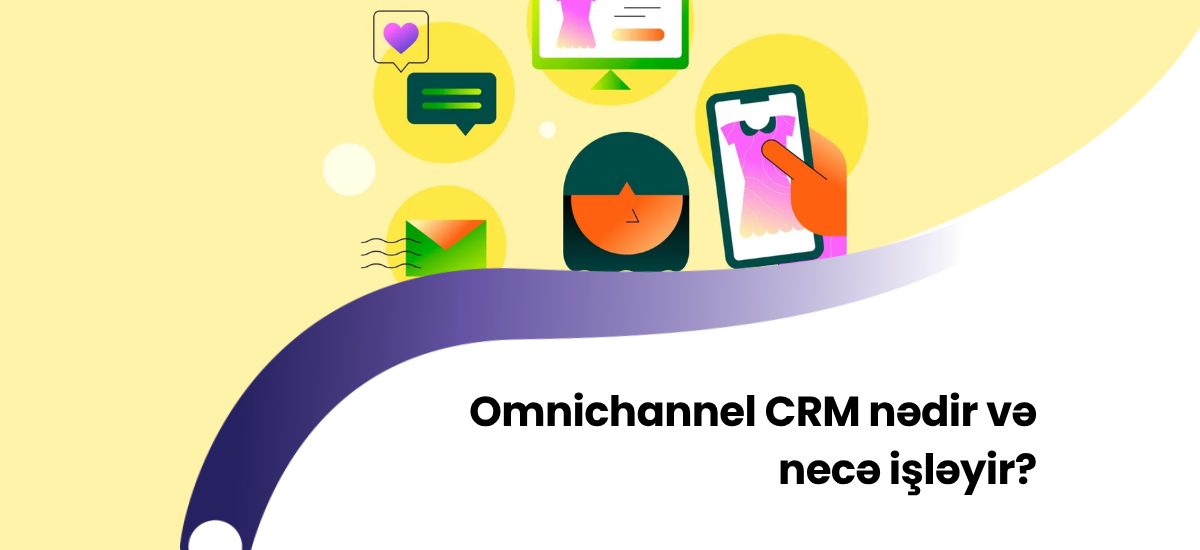
The most precise answer to what is omnichannel CRM is this: it is a unified digital platform that consolidates a customer’s entire communication history across all channels—WhatsApp, Email, Phone calls, Social Media (Instagram, Facebook), and your Website—into one single, central screen.
The prefix "Omni" comes from Latin, meaning "all" or "every." A standard CRM system merely acts as an address book, storing names and sales histories. An Omnichannel CRM, however, actively orchestrates live, uninterrupted communication across every channel in real-time.
Multichannel vs omnichannel: What is the fundamental difference?
The terms multichannel vs omnichannel are frequently used interchangeably in the market. However, there is a massive architectural difference between the two:
| Critical Criteria | Multichannel (Siloed) | Omnichannel (Fully Integrated) |
|---|---|---|
| Channel Relationship | The company has multiple channels, but they operate blindly without talking to each other. | All communication channels are perfectly synchronized in real-time. |
| Customer View | The customer has a fragmented, different profile on each channel. | The system recognizes the customer under one unified, single profile. |
| Data Context | When the channel changes, the context of the previous conversation is entirely lost. | Regardless of channel shifts, the conversation continues exactly where it left off. |
| Agent Experience | Different agents are assigned to monitor different specific channels. | One agent can reply to all channels simultaneously from a single dashboard. |
To put it simply: Multichannel means a company has many doors, but inside, each door opens into a locked, separate room. Omnichannel means all those doors open into the exact same bright, central hall.
How does omnichannel customer service actually work?
A flawless omnichannel customer service architecture is built upon four foundational pillars:
1. Single Customer View
Whether a client messages on WhatsApp or calls via phone, the system instantly identifies them via their phone number or email. The moment the agent looks at the screen, they see: "Mr. Ali messaged on WhatsApp yesterday, called 3 days ago, and completed a $500 purchase 2 weeks ago."
2. Unified Inbox
All incoming requests pool into a single central list, regardless of the application they originated from. The agent does not need to put down the phone or switch browser tabs—they reply to emails, Instagram DMs, and WhatsApp texts from one single, clean interface.
3. Seamless Context Continuity
A customer begins a lengthy complaint on WhatsApp but decides to call the hotline to finish it. The moment the agent answers the call, the customer's previous WhatsApp chat appears on their screen. The agent immediately says, "Yes, I can see the photo you just sent on WhatsApp." The customer never has to repeat themselves.
4. Artificial Intelligence (AI) Assistance
In modern infrastructures, AI integrated into CRM systems acts as a co-pilot: it reads incoming tickets, categorizes them, analyzes the customer's sentiment (angry vs. neutral), and suggests the most appropriate response template for the agent to send with a single click. More advanced systems can also use AI agents to automate business processes.
CRM channels integration: What matters most in the local market?
A proper CRM channels integration strategy must prioritize the platforms where your target audience spends the most time. For the Azerbaijani and regional markets, the hierarchy of channels looks like this:
| Communication Channel | Importance in the Local Market |
|---|---|
| WhatsApp Business | 🔴 Most Critical (The absolute primary communication tool for all businesses) |
| Phone (Call Center) | 🔴 Very High (Crucial for B2B deals and high-ticket sales) |
| Instagram DM | 🟡 Medium/High (A rapidly growing trend for B2C and retail) |
| Corporate Email | 🟡 Medium (Mainly utilized for B2B and official documentation) |
| Website Live Chat | 🟡 Medium (Highly effective for quick lead generation) |
Direct Business Benefits of an Omnichannel System
- A Massive Leap in Customer Satisfaction: Repeating the same details to different employees is the number one cause of customer rage. Global studies show that companies offering an Omnichannel experience retain 89% of their customers, compared to a mere 33% retention rate for those with weak omnichannel execution.
- Spike in Agent Productivity: Employees no longer waste time juggling apps and searching for passwords. Working from a Unified Inbox reduces average customer response times by 40%.
- Precise ROI Calculation: Using CRM analytics and ROI calculations, you can accurately track which channel drives the highest-paying customers and which platform yields the fastest conversion rates.
Custom Solution vs Ready-Made Platforms?
There are global, ready-made Omnichannel platforms available like Zendesk or Intercom. However, applying these global solutions to the local market often triggers these issues:
- Lack of full native language support for both the interface and official reporting modules.
- No deep integration with local accounting software (e.g., 1C), leaving stock and invoicing data completely isolated.
- Because pricing is structured on a "Per-Agent" basis, monthly licensing costs skyrocket to unrealistic levels as your team grows.
To bridge these gaps, custom-engineered projects like the Topaz CRM project built by Crocusoft ensure that WhatsApp, Email, Phone, and 1C integrations function perfectly within a single window, fully aligned with the logic and language of the local market.
Frequently Asked Questions
Is it worth building an Omnichannel CRM for a very small team (1-2 people)?
If your team is smaller than 5 people, a full-scale Omnichannel platform might be overkill. However, simply turning WhatsApp into a mini CRM and centralizing email communication will save you an incredible amount of time. A basic CRM + WhatsApp Business integration is the perfect starting point for this stage.
How long does it take to deploy a fully operational system?
If you are configuring an existing, ready-made platform, the process takes roughly 2 to 4 weeks. However, if you are building a tailored custom software solution that requires deep integration with your internal ERP/1C databases, development can take 2 to 4 months depending on the requirements.
Can I achieve all of this without the official WhatsApp Business API?
No. The standard (free) WhatsApp Business app only handles basic messaging. To legally, securely, and seamlessly connect it to a central CRM, create a "Unified Inbox," and deploy AI bots, you absolutely must utilize the official API infrastructure provided by Meta.
Conclusion
The modern consumer is never loyal to just one channel. They will message you on WhatsApp in the morning, call your hotline at noon, and send supporting documents via email in the evening. The ability to transform all this communication chaos into a single, seamless narrative is the foundational pillar of both customer satisfaction and scalable sales.
In the regional market, Omnichannel CRM architectures are not yet widely adopted—meaning those who build them now gain an enormous competitive advantage. Are you ready to manage your entire customer service operation from a single, powerful dashboard?
To analyze your current workflows and build a custom Omnichannel solution for your company, contact the experts at Crocusoft →