 +994512060920


Imagine this scenario: A company allocates a massive budget and spends 6 months building new software. The team works day and night, the code is robust, the design is perfected, and the product is finally launched to the market with high expectations. The result? Nobody uses it. The failure wasn't due to poor code quality; the failure happened because they built something the users never actually needed or wanted in the first place.
Unfortunately, this scenario is incredibly common in the tech industry. According to global research, over 35% of startups and new software products fail strictly because there is "no market need." The only proven methodology to prevent wasting millions of dollars and months of engineering time is a rigorous process known as "Product Discovery."
What is product discovery and why should every project start with it?
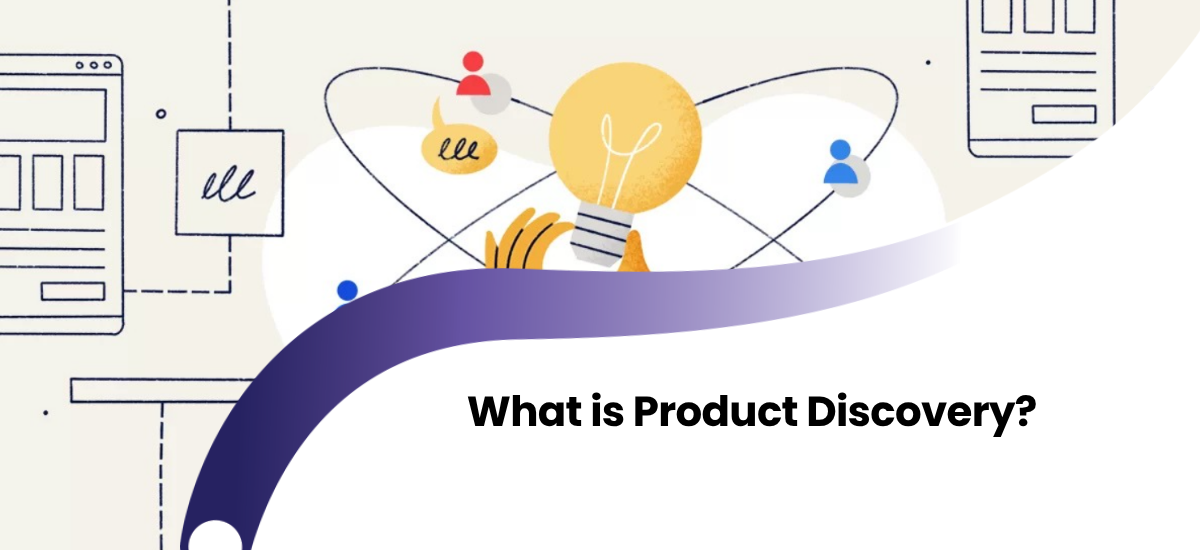
The clearest answer to what is product discovery is this: It is an analytical research process conducted before a single line of code is written, designed to determine the right problem to solve, the correct target audience, and the most effective solution for them.
In simple terms, Product Discovery answers the question: "What should we build?" Product Delivery, on the other hand, answers the question: "How should we code it?" Most companies suffer heavy losses because they skip straight to Delivery. Coding is the most expensive phase of any project—code written in the wrong direction is the most expensive code to throw away. For instance, building a flawed mobile application might take 4-6 months, but with proper Discovery, you can prove the idea is flawed in just 3-4 weeks.
Product discovery process: The 4 critical risks you must validate
According to global product management standards (specifically Marty Cagan’s framework), the product discovery process must test and neutralize four foundational risks before development begins:
| Type of Risk | Core Question to Answer | Validation Method |
|---|---|---|
| Value Risk | Do customers actually want this, and will they pay for it? | User Interviews, Fake Door testing |
| Usability Risk | Can users easily understand and navigate this product? | Usability Testing, Clickable Prototypes |
| Feasibility Risk | Can our engineers actually build this with current technology? | PoC (Proof of Concept) and technical audits |
| Business Viability Risk | Does this solution align with our budget, legal, and sales models? | Financial modeling, legal and compliance checks |
Product discovery phases: From problem to definitive solution
Product discovery phases do not consist of chaotic brainstorming sessions; rather, it is a systematic, step-by-step framework. To build a successful product, these distinct phases must be followed:
Phase 1: Deeply Understanding the Problem
In the first step, you must fall in love with the problem, not your proposed solution. Saying "We want to increase sales" is a business desire, not a problem. A real problem sounds like this: "Our sales team forgets to follow up with leads, causing us to lose revenue." In this phase, at least 20 in-depth interviews are conducted with potential users to understand their current workflows (Jobs-to-be-Done).
Phase 2: Mapping Opportunities
All the gathered data must be structured. Using the "Opportunity Solution Tree" methodology, the core business objective, user pain points, and potential solutions are visually mapped out to maintain clear focus.
Phase 3: Formulating Hypotheses
Every potential solution is framed as a testable hypothesis. For example: "If we build an automated follow-up reminder module for sales managers, the follow-up completion rate will increase by 30%, because currently, 40% of leads are forgotten due to human error."
Phase 4: Rapid Experimentation
The goal is to prove the hypothesis using the cheapest method possible, without writing any production code:
- Fake Door Testing: Place a button on your site for a feature that doesn't exist yet. Measure how many people click it.
- Concierge Testing: Provide the service to the customer manually behind the scenes before building the automated software. Do they find it valuable?
- Prototyping: Test user reactions using a high-fidelity, clickable design prototype.
Phase 5: Learning and Final Decision
The data collected from these experiments leads you to one of three decisions: Persevere (the hypothesis is proven, move to programming), Pivot (there is a need, but the approach must change), or Kill (the problem doesn't exist, cancel the project).
UX research methods for effective discovery
UX research methods vary depending on the nature of the project. To extract accurate information, product teams commonly rely on the following discovery tools:
| Research Method | What It Teaches You | Average Duration |
|---|---|---|
| User Interviews | The user's actual pain points, motivations, and context. | 1–3 weeks |
| Usability Testing | Whether the user can easily find the right buttons in a prototype. | 1–2 weeks |
| A/B Testing | Which of two different solutions yields higher conversion rates. | 2–4 weeks |
| Competitor Analysis | Identifying the strengths and critical flaws of other market players. | 1–2 weeks |
Product strategy: The harmony between Discovery and Delivery
When forming a solid product strategy, Discovery and Delivery should not be viewed as sequential stages, but rather as parallel, continuous tracks. This approach is known in the industry as "Dual-Track Agile." While one part of the engineering team (Delivery) is coding the validated features, the product managers and designers (Discovery) operate 1-2 sprints ahead, researching and validating the features to be built in the upcoming months.
Frequently Asked Questions
Is Product Discovery only necessary for new startups and SaaS companies?
No. Any company planning to add a new module or a major feature to an existing software platform must undergo this process. Large corporations are just as capable of wasting millions on useless features as startups are. Discovery mitigates this risk at any scale.
What kind of professionals are needed to execute this process?
The ideal setup is known as the "Product Trio": A Product Manager, a UX Researcher/Designer, and a Tech Lead. However, for smaller projects, an experienced Project Manager (PM) can successfully coordinate all these roles to ensure proper validation.
How much of the total project budget should be allocated to Discovery?
According to industry standards, the Product Discovery phase should account for approximately 10-15% of the total software development budget. For instance, on a $50,000 project, spending $5,000 upfront to find the exact right path is an infinitely better investment than writing $50,000 worth of useless code.
Conclusion: Why Crocusoft Starts Every Project with Discovery
Product Discovery is never a "waste of time"; on the contrary, it is your project's life insurance. Rather than losing 6 months coding a flawed idea, validating the right problem and solution in just 3 weeks protects your business from devastating financial losses. The urge to "code fast and launch quickly" is tempting, but a hastily built product that no one uses is simply an expensive illusion.
At Crocusoft, we initiate our large-scale enterprise projects, such as the Topaz B2B CRM, with a deep and rigorous Discovery phase. Are you looking to validate whether the market truly demands your idea and ensure a bulletproof software architecture is built?
Get in touch with the Product experts at Crocusoft right now to discuss your vision →